
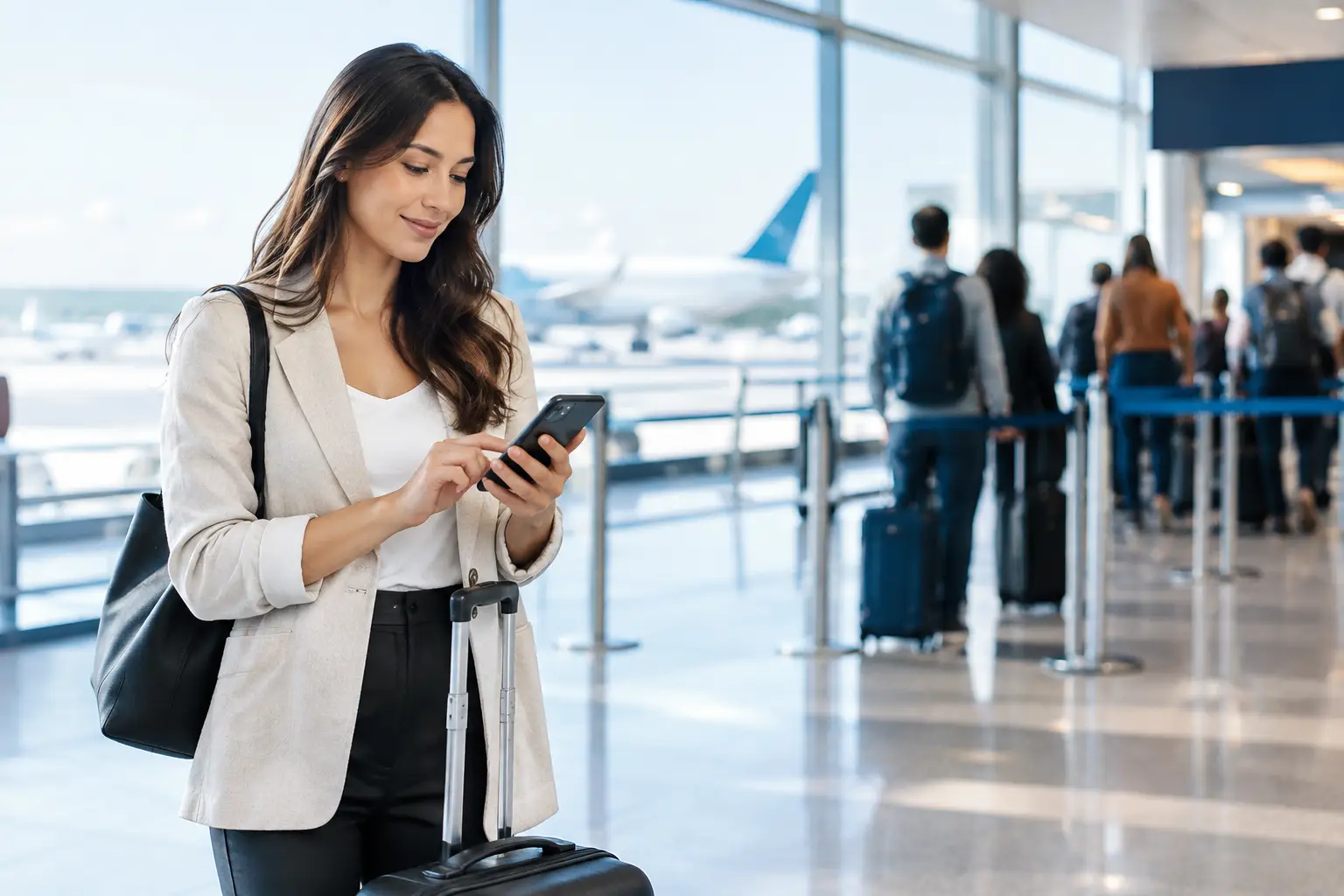
A queue at the wrong point in an airport can change the entire feel of a journey. Ten minutes at bag drop is manageable; forty minutes at security when boarding is approaching is not. The best ways to avoid airport queues are less about luck and more about reducing decisions, paperwork and preparation at the points where travellers commonly get held up.
For a smoother departure or arrival, think of the airport as a sequence of separate bottlenecks. Check-in, security, passport control, boarding and baggage reclaim each have their own busy periods and practical fixes. A well-planned journey allows time where it matters without spending hours unnecessarily early in the terminal.
Choose your airport arrival time carefully
The familiar advice to arrive as early as possible is only partly useful. Arriving excessively early can mean joining a queue before an airline desk or bag-drop area has opened, while arriving late removes any margin for disruption. The right timing depends on the airport, airline, destination, time of day and whether you are travelling with hold luggage.
For most short-haul journeys, arriving around two hours before departure is a sensible starting point. Long-haul flights, school holidays, Friday afternoons and early departures can justify more time. Check the airport and airline guidance for your specific flight, but use judgement as well: a Saturday morning during a major holiday period will rarely behave like a quiet midweek afternoon.
It also helps to look at the whole journey to the terminal, not simply the flight time. Leave room for road congestion, parking or drop-off arrangements, locating the correct entrance and walking from the forecourt to the airline area. The objective is to arrive composed and ready to proceed, rather than reaching the terminal at the last possible minute.
Check in before you leave home
Online check-in is one of the simplest ways to remove a queue from your journey. Complete it as soon as the airline permits, check that the name on the booking matches your travel document, and save the boarding pass in the airline app as well as taking a screenshot or paper copy if you prefer a backup.
Checking in early is also your opportunity to resolve issues while there is still time. Confirm baggage allowance, seat allocation, passport details, visa requirements and any destination-specific entry rules. A surprising number of airport delays begin when a traveller reaches the desk and discovers that an essential detail has not been completed.
If you only have hand luggage, online check-in may allow you to go directly to security. If you are checking a bag, see whether the airline offers a self-service bag-drop facility. These can be quicker than a staffed desk, although they are not always the best choice for unusual baggage, complex itineraries or a booking that needs assistance.
Prepare for security before you join the line
Security queues often appear unpredictable because they slow down when people unpack at the trays. The useful preparation happens before you reach the front. Keep your boarding pass and identification easy to access, but do not carry loose items that need to be gathered at the last moment.
Airport security rules can vary, particularly around liquids and electronic devices. Some airports have newer screening equipment and allow certain items to remain in bags, while others still require the traditional separation of liquids and larger electronics. Check the departure airport's current guidance shortly before travelling rather than relying on what happened on a previous trip.
Wear footwear and outer layers that are easy to manage if requested. Empty pockets before the queue begins, place coins and keys in a small pouch or jacket pocket, and ensure liquids are within the permitted limits and packed correctly. The goal is not to rush through screening. It is to be ready when staff give an instruction, which keeps the line moving for everyone.
Keep your hand luggage deliberately simple
A densely packed cabin bag can create problems at security and at the gate. Put the items you may need in the terminal - medication, travel documents, headphones, a charger and a light layer - in one accessible section. Everything else should be packed securely enough that you are not searching through the case in public.
Families and travellers carrying specialist equipment may need more time, and that is entirely reasonable. In those cases, build in additional margin rather than expecting security to move at the pace of a solo traveller with one small bag.
Consider fast-track only when it solves a real problem
Fast-track security can be worthwhile during consistently busy periods, especially when the price is modest and your schedule has little flexibility. It is not, however, a guarantee of an empty lane. If many travellers have booked the same service, or staffing is reduced, there may still be a wait.
The value depends on the likely standard queue, not the name of the product. Check whether fast-track covers security, passport control or both, and whether it is valid at your terminal and time of travel. At some airports, a premium ticket or airline status includes access; at others, it must be purchased separately.
Avoid treating fast-track as a substitute for sensible timing. It can protect a well-organised journey, but it cannot resolve a late arrival, missing documents or an issue at bag drop.
Do not create a queue at the gate
Boarding often becomes slow when passengers wait until their group is called before locating passports, rearranging bags or discovering their cabin case exceeds the allowance. Once you have passed security, take a moment to confirm the gate number and boarding time, then organise what you will need before boarding begins.
Stay close enough to hear announcements, particularly if the departure gate changes. Airports can be large, and a gate at the far end of the terminal may require a brisk walk. If you intend to buy food or visit a lounge, set an alarm for when you need to start making your way back.
When your group is called, join the queue with documents ready and luggage under control. There is no advantage in standing at the gate long before your group is invited forward, unless you need extra assistance or the airline has specifically instructed otherwise.
Plan for arrival queues as well as departure queues
The journey is not over when the aircraft lands. Passport control can be the longest queue on an international arrival, particularly when several flights reach the terminal at once. Where eligible, use electronic passport gates, but have your passport accessible and remove hats, tinted glasses or anything that may obstruct a facial scan.
Electronic gates are efficient when they work, but they are not always quicker. A technical issue or several rejected scans can make a staffed desk more practical. Follow the airport signage and staff direction rather than committing to a line simply because it initially looks shorter.
For destinations with arrival forms, health declarations or visa checks, complete any required documents before landing where possible. Keep accommodation details and onward-travel information available, as border officers may ask for them. A calm, prepared answer is usually all that is needed.
Make baggage reclaim less frustrating
Baggage reclaim is one queue you cannot entirely avoid, but you can prevent it from delaying the next stage of your journey. Check the baggage belt number as soon as it is displayed, then stand back from the carousel rather than blocking the edge. You will see cases sooner and have room to step forward when yours arrives.
Use a distinctive luggage tag, strap or discreet marker so your case is recognisable without guessing. Avoid leaving the arrivals area until you have checked the case is yours and inspected it for obvious damage. If something is missing or damaged, report it before leaving the airport, as airline procedures may be more difficult afterwards.
A simple pre-airport check
Before setting off, confirm these practical details:
- Your boarding pass and passport are accessible, with names and dates checked.
- Your baggage allowance matches what you have packed.
- Security rules at your departure airport have been reviewed.
- Your route to the terminal allows time for normal delays.
- You know whether fast-track, lounge access or airline priority benefits apply to your booking.
The calmest airport journeys are usually the least dramatic because the key decisions were made beforehand. Give yourself a realistic margin, keep documents and luggage organised, and treat each airport process as its own task. That leaves more time for the part of travelling that should not feel rushed: getting comfortably on your way.
Ready to book your journey?
Private chauffeur transfers and Highland tours from Edinburgh, booked online in minutes.
Book Online Instantly