
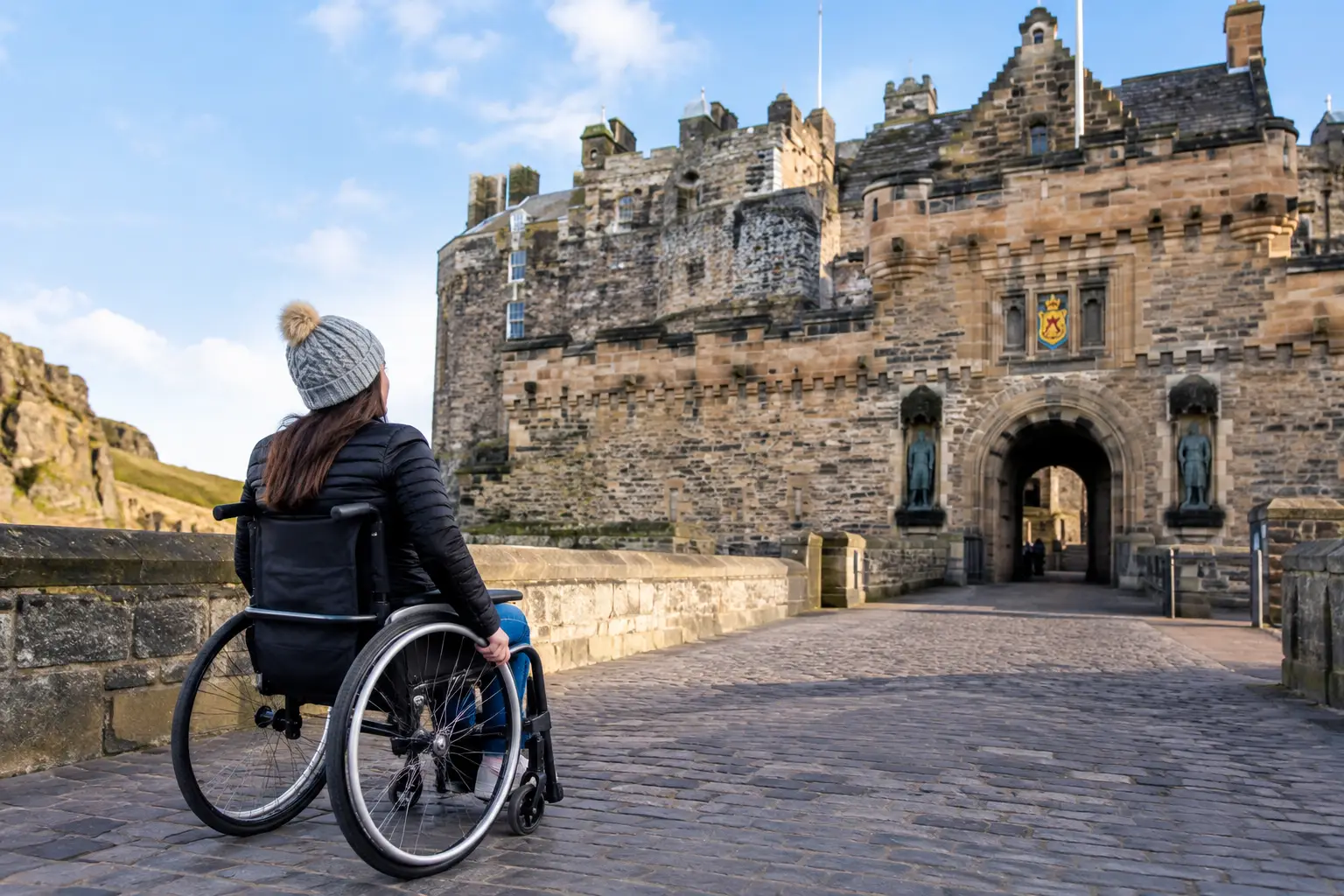
Edinburgh Castle accessibility is best approached with clear expectations. This is a working historic fortress on a volcanic rock, not a purpose-built modern attraction: the views are exceptional, but the approach includes steep gradients, uneven cobbles and busy outdoor spaces. With sensible planning, many visitors with mobility, sensory or energy-limiting needs can enjoy a rewarding visit, even if seeing every area is not realistic.
Why Edinburgh Castle needs a little more planning
The castle sits at the top of Castlehill, at the western end of the Royal Mile. Its position is part of its appeal, but it also shapes the visitor experience. The route from central Edinburgh rises noticeably, and the final approach across the Esplanade can be exposed to wind and rain. Within the grounds, surfaces vary between paving, cobbles, stone paths and steps.
The key decision is not simply whether the castle is accessible, but which parts matter most to your group. A visitor interested in the Crown Jewels, the Great Hall and the panoramic city views may have a different ideal route from someone who wants to explore every museum and building. Allowing time to pause, choosing a manageable route and accepting that a few historic spaces may be impractical can make the day considerably more enjoyable.
Edinburgh Castle accessibility: terrain and routes
The approach to the entrance
Castlehill is steep, particularly when approaching from the Royal Mile. Wheelchair users, visitors with reduced stamina and those using walking aids may prefer to arrive as close to the Esplanade as local traffic controls allow, rather than tackling the full climb on foot. The exact drop-off arrangement can change during major events, road works and busy festival periods, so it is worth confirming it shortly before travelling.
The Esplanade itself is broad but can be uneven in places. It is also used for large-scale events, most notably during the Edinburgh Festival Fringe period and military tattoo season. At these times, temporary structures, diversions and higher pedestrian volumes can alter the usual feel of the approach.
If you are travelling in a pre-booked vehicle, give the driver the castle entrance as your destination rather than assuming a door-to-door drop-off will be possible. The Old Town has restricted streets, pedestrian areas and limited turning space. A well-planned arrival should prioritise the shortest safe walking distance, not just the postcode.
Moving around the castle grounds
Once inside, the castle has an accessible route through significant parts of the site, but gradients remain unavoidable. Some slopes are demanding, particularly in wet weather, and the stone underfoot can be slippery. Sturdy footwear with good grip is more useful than shoes chosen purely for appearance.
There are steps in several areas, narrow historic doorways and upper floors that cannot always be reached by lift. This is where expectations matter. Edinburgh Castle offers substantial value without covering every corner, but visitors should not expect full step-free access to all rooms, displays or viewpoints.
The main outdoor viewpoints can be particularly rewarding, although the surface and crowding around them may require care. If a member of your party finds standing difficult, build in pauses before reaching the busiest viewing areas rather than saving all energy for the end of the visit.
Inside the historic buildings
Interior access varies building by building. Some displays are easier to reach than others, while older rooms may have thresholds, staircases or restricted circulation. The Crown Jewels and Stone of Destiny are among the most popular elements of a visit, so this area can feel crowded even outside peak summer dates.
For anyone who cannot comfortably queue or stand for long periods, arriving early in the day is often more helpful than trying to navigate at the busiest midday point. Staff can advise on the most suitable route on the day, particularly if an exhibition space has altered access arrangements.
Facilities and practical comforts
Accessible toilet facilities are available within the castle complex, though their location may not align neatly with every visitor route. On arrival, ask a member of staff where the nearest facilities are in relation to the areas you most want to see. This simple question can prevent an unnecessary uphill return journey later.
Seating exists across the site, but it is not continuous and should not be relied upon at every point. Visitors who need regular rests should plan a slower pace and identify indoor displays or café areas as natural breaks. The castle is compact on a map, yet the combination of slopes, surfaces and queues can make it feel more physically demanding than its size suggests.
Weather has a direct effect on comfort. Edinburgh can be windy at the castle even when lower parts of the city feel calm, while rain makes cobbled and stone surfaces more challenging. A waterproof outer layer, warm clothing and a compact plan for shelter are sensible throughout much of the year.
Sensory needs, crowds and quieter timings
The castle is one of Scotland's busiest visitor attractions. School holidays, weekends, cruise-ship days and August can bring dense crowds around entry points and headline displays. Sound levels rise in enclosed rooms, and narrow routes can feel pressured when groups move through together.
Visitors with sensory sensitivities may find the first morning entry slot or a visit outside the peak summer season more comfortable. Ear defenders, a familiar snack, water and a clear agreement about where to regroup can be useful for families and adult visitors alike. The outdoor parts of the castle generally offer more space to reset, though they are also more exposed to the elements.
Staff are usually the best source of immediate help if a route becomes too busy or a member of your group needs a quieter moment. There is no benefit in pushing on simply to complete a planned circuit. A shorter visit that focuses on a few meaningful spaces is often the better experience.
Mobility equipment and companion support
Do not assume that every type of mobility equipment will suit every route. Manual wheelchairs may be easier to manage over uneven ground with a companion, while larger powered equipment can be constrained by gradients, turning space and historic interiors. Before setting out, check the castle's current access information and ask specifically about the equipment you will be using.
If you require a wheelchair, mobility scooter, assistance animal or another reasonable adjustment, contact the castle team in advance rather than leaving the question until arrival. Availability of any loan equipment, the location of accessible entrances and temporary maintenance works can change. Advance confirmation gives you the clearest picture and avoids building the day around an assumption.
Companions should also be realistic about the physical demands. Pushing a chair uphill over uneven surfaces requires effort, particularly in rain. Taking the route slowly, carrying less and allowing time for rest are practical choices, not compromises.
Questions worth asking before your visit
A brief call or email ahead can make a material difference. Ask whether the accessible route currently includes the areas you most want to visit; whether any lifts, paths or displays are temporarily unavailable; where vehicles can safely set down nearby; and whether your chosen mobility equipment is suitable for the site.
It is also sensible to check the day’s opening arrangements and whether major events are affecting Castlehill. The Edinburgh Military Tattoo, festival activity and occasional ceremonial events can change pedestrian flow considerably. If predictability matters, choose a quieter date where possible.
Plan the wider day around your energy
The castle often takes longer than visitors expect, especially when accessibility needs are part of the plan. Avoid booking a tightly timed lunch, tour or theatre performance immediately afterwards. The walk downhill towards Princes Street or the Grassmarket can be as tiring as the journey up, depending on your route.
A comfortable vehicle collection point after the visit can be preferable to searching for transport while tired in a crowded Old Town street. If you are arranging transport for guests or family members, share their mobility requirements and the planned collection time in advance, while allowing flexibility for the pace of the visit.
Edinburgh Castle does not need to be rushed to be memorable. Choose the parts that matter, give yourselves permission to pause, and let the castle's history set the pace rather than the itinerary.
Ready to book your journey?
Private chauffeur transfers and Highland tours from Edinburgh, booked online in minutes.
Book Online Instantly