
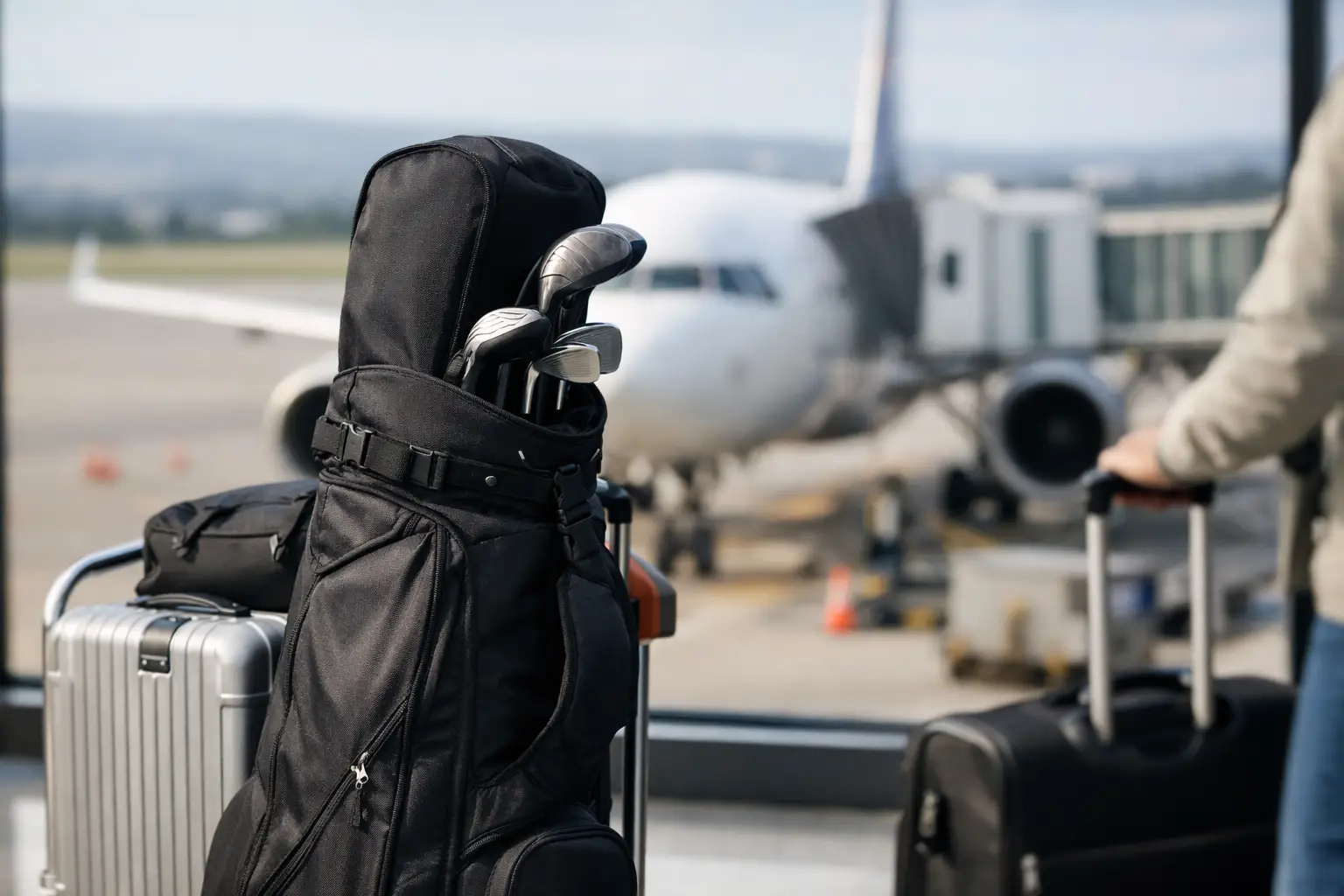
A missed tee time is frustrating. Arriving with a damaged driver, a split travel bag or no room for your luggage is worse. Knowing how to transport golf clubs properly means planning for the full journey, not simply putting a golf bag in the boot and hoping it fits.
For golf breaks, corporate hospitality days and trips to Scotland’s leading courses, the right transport arrangement protects your equipment and keeps the day running to schedule. Whether you are driving, taking a private hire vehicle or flying into Edinburgh, a few practical decisions make a significant difference.
Choose the right type of golf bag
Your bag should match the way you are travelling. For a local round or a short road journey, a standard cart bag or carry bag is usually sufficient, provided it can lie securely in the vehicle. For longer journeys, particularly where other passengers have luggage, a lighter stand bag can make loading easier.
If you are flying or your clubs will be handled by more than one person, use a dedicated golf travel cover. Soft travel bags are lighter and easier to store, but offer less protection against heavy handling. Hard cases provide the best protection for premium clubs, although they take up more room and can be awkward in smaller vehicles.
A hybrid travel bag with reinforced sides is often a sensible middle ground. The right choice depends on the value of your equipment, how many transfers are involved and how much luggage space is available.
Prepare your clubs before they travel
The most vulnerable parts of a golf bag are the club heads, shafts and any loose accessories. Before loading the bag, fit headcovers to woods, hybrids and putters. Wrap towels around the club heads to reduce movement inside the bag, particularly if you have a driver with an adjustable head.
Some golfers remove driver and wood heads if their clubs are designed for it. This can reduce the risk of a snapped shaft during a flight, but keep the adjustment tool and screws in a labelled pocket so nothing is misplaced. A stiff arm, also called a support rod, is another useful safeguard inside a travel bag. It sits slightly higher than the longest club and helps absorb an impact before it reaches the club heads.
Take photographs of your clubs and bag before travelling, especially for flights. They are useful for insurance purposes and make it easier to identify your property should your luggage be delayed. Keep valuables such as rangefinders, watches, wallets and electronics with you rather than in the golf bag.
How to transport golf clubs by car
Transporting golf clubs by car is straightforward when the vehicle has enough capacity. The risk comes from forcing bags into a full boot, resting heavy cases on top of club heads or allowing the bag to slide around during the journey.
Place the golf bag flat where possible, with the club heads protected from hard edges and heavy luggage. If the boot is deep enough, stand the bag upright and secure it so it cannot tip over. Avoid putting suitcases directly on the upper section of the bag. A soft jacket or blanket between items provides useful protection without adding bulk.
For a group travelling to a course, check capacity before setting off. Four golfers may each have a golf bag, a holdall, shoes and waterproofs. Add a folding trolley, and a vehicle that looked spacious can quickly become unsuitable. Estate cars, executive MPVs and larger people carriers are generally better suited to golf travel than standard saloons.
If you are hiring a car, do not assume that a large boot will take several golf bags. Ask about usable luggage capacity, not just the number of suitcases quoted. Golf bags are long, shaped awkwardly and do not stack as efficiently as standard luggage.
Booking private hire for golf travel
A professional chauffeur or private hire journey is often the most practical option when you want to arrive ready to play. It removes the need to navigate unfamiliar roads, find parking, carry bags between stations or restrict yourself after a round.
When booking, provide the key details upfront: passenger numbers, the number of golf bags, suitcases, trolleys and any oversized equipment. This allows the transport provider to allocate a vehicle with appropriate luggage space rather than relying on assumptions. It is particularly important for airport collections, golf tours and multi-course itineraries.
For early tee times, request a collection time that accounts for loading, traffic and time to check in at the course. A punctual driver and a suitable executive vehicle give you a calmer start than trying to fit clubs into an unsuitable taxi at the last minute. For visitors travelling between Edinburgh, St Andrews, Gleneagles or the Highlands, pre-booked transport also gives you a clear plan for the return journey.
AlbaGo provides pre-booked executive transport for golf travellers who value reliable timings, licensed drivers and clear, fixed pricing. When requesting a journey, mention your golf equipment so the vehicle can be matched to your group and luggage requirements.
Taking golf clubs on a flight
Airlines treat golf bags as checked sporting equipment, but their allowances, fees and weight limits vary. Confirm the policy for your specific flight before you travel. Some airlines include a golf bag within your checked baggage allowance, while others charge separately or apply excess baggage fees.
Arrive earlier than you would for hand luggage only. A golf bag may need to be checked at a separate oversized luggage desk, and this can take additional time. Attach a durable luggage tag with your name and phone number, and remove old airline labels that could cause confusion.
Keep your travel cover zipped, strapped and locked where appropriate. If using a lock, make sure it is accepted for airport security screening. Avoid packing prohibited items such as gas canisters in the bag, and check airline rules before including cleaning fluids or batteries.
On arrival, collect your clubs from the oversized baggage area if directed. Inspect the bag before leaving the airport. If there is visible damage, report it immediately at the airline desk. Delaying the report can make a claim more difficult.
Plan airport transfers around your clubs
An airport transfer should be booked as a luggage journey, not just a passenger journey. A couple with two golf bags and two large cases may need more space than four passengers with cabin luggage. Be precise when you book, particularly if you have hard cases or several bags.
For an Edinburgh airport transfer, share your flight number and expected arrival time, as well as the equipment you are carrying. Flight monitoring and a pre-arranged collection point can reduce the uncertainty of arriving with bulky sporting luggage. It also means you are not left searching for a suitable vehicle after a long flight.
If your itinerary includes more than one course, consider leaving non-essential luggage at your accommodation between rounds. This keeps the vehicle organised and makes loading quicker. Good golf travel is not about filling every available space. It is about leaving enough room to protect the equipment and travel comfortably.
Avoid the common mistakes
Most problems are preventable. Do not book the smallest vehicle available simply because it is cheaper, particularly for a group. Do not leave club heads uncovered, store valuables in checked luggage or wait until the day of travel to check an airline’s sports equipment policy.
It is also worth thinking beyond the clubs themselves. Wet weather gear, golf shoes, umbrellas and a change of clothes take up more room than many travellers expect. If you are playing in Scotland, packing for changeable conditions is sensible, but tell your transport provider about the extra luggage.
Can golf clubs fit in a standard taxi?
Sometimes, but it depends on the vehicle and the number of passengers. A single golf bag may fit in many saloons, while two or more bags plus cases can require an estate car, MPV or larger executive vehicle. Always declare golf bags at the time of booking.
Should I use a hard or soft golf travel bag?
Choose a hard case for maximum protection during flights or when carrying expensive equipment. A soft or hybrid bag is easier to handle for road travel and storage. Add internal protection in either case, as a travel bag alone does not stop clubs moving around.
Can I leave golf clubs in the vehicle during a round?
It is better to take your clubs with you to the course bag drop or designated storage area. If other luggage must remain in the vehicle, discuss this with your driver before the journey. Never leave valuables visible inside.
Your golf trip should begin with a vehicle that has room for the people, the clubs and the details that make the day enjoyable. Book your transport early, describe your equipment accurately and travel with the confidence that your clubs will arrive when you do.
Ready to book your journey?
Private chauffeur transfers and Highland tours from Edinburgh, booked online in minutes.
Book Online Instantly