
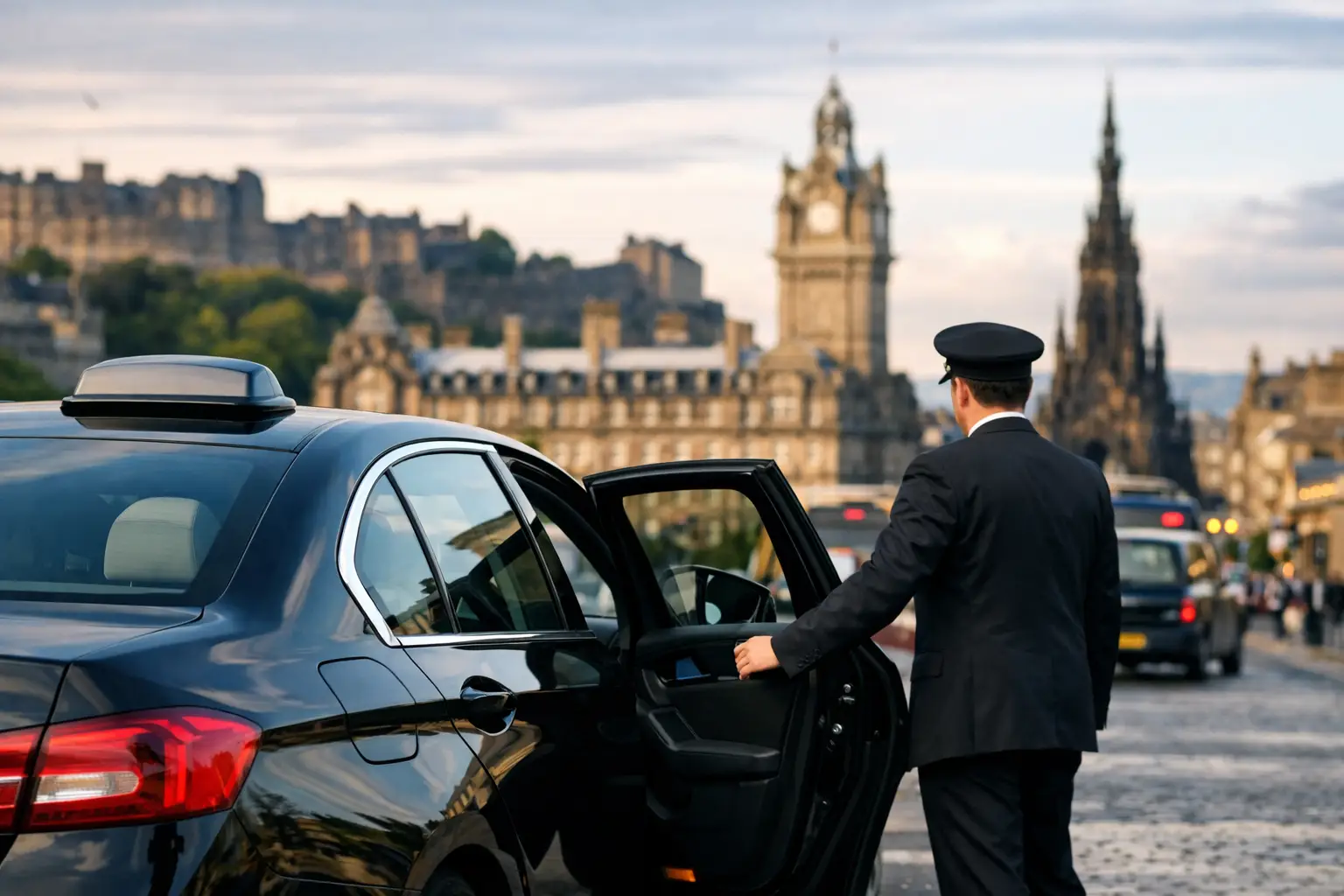
A smartly presented vehicle and a courteous driver are welcome, but they are not proof of compliance. If you are asking, is private hire licensed, the practical answer is yes: a legitimate private hire journey should be carried out by appropriately licensed drivers and vehicles under the relevant local authority rules. For airport passengers, corporate travellers and anyone booking executive transport, checking this matters long before the day of travel.
Private hire is designed for pre-booked journeys. That includes an Edinburgh Airport transfer arranged in advance, a chauffeur for an executive meeting, or a long-distance trip across Scotland. The licensing framework exists to set standards around safety, suitability and accountability - the foundations of a journey you can rely on when timing matters.
Is private hire licensed in Edinburgh?
In Edinburgh, private hire licensing is administered by the local authority. A private hire vehicle and the driver operating it must meet the applicable licensing requirements. These requirements are distinct from taxi licensing, even though both services carry paying passengers.
The simplest distinction is how the journey is obtained. Taxis can generally be hailed on the street or hired from a taxi rank, subject to local rules. Private hire vehicles must be pre-booked through an operator or booking channel. They should not be treated as vehicles available for casual street hire.
That difference is especially useful for travellers. When you reserve an airport transfer Edinburgh passengers can depend on, the provider has the time to confirm the pickup point, flight details, luggage requirements and destination. There is a clear record of the booking, rather than uncertainty at the kerbside after a long flight.
Licensing rules can vary between council areas, and they may be updated over time. A professional operator should understand the requirements that apply to its vehicles, drivers and bookings, including when a journey begins in one area and ends in another. If a provider is vague when asked about licensing, it is reasonable to choose another option.
What does a private hire licence cover?
There is no single piece of paper that tells the full story. Properly operated private hire usually involves separate obligations for the driver and the vehicle, with additional rules applying to the business taking the booking. The exact terminology and process depend on the relevant licensing authority.
Driver licensing and suitability
A private hire driver is expected to meet standards set by the licensing authority. These commonly include identity checks, suitability assessments, driving licence checks and criminal record vetting. Medical fitness and local knowledge requirements may also apply, depending on the area.
For passengers, this is about more than paperwork. You are placing your schedule, luggage and personal safety in somebody else’s hands. A licensed, professional driver brings the assurance of accountability alongside the practical benefits of experience, route planning and a calm approach to changing travel conditions.
Vehicle licensing and condition
The vehicle also needs to meet applicable standards. Authorities can set requirements around roadworthiness, insurance, age, maintenance, safety equipment and inspections. The vehicle should be suitable for carrying passengers for hire and reward, not simply a private car being used informally for paid journeys.
Executive travel adds another consideration: suitability for the journey itself. A saloon may be ideal for one or two business travellers with light luggage, while an airport collection for a family, golf party or group with several cases may require more space. A reputable private hire Edinburgh provider will ask the right questions before confirming the booking.
The booking record
Private hire travel is pre-booked for a reason. The booking creates clarity for both passenger and operator: who is collecting you, when and where the collection is due, where you are travelling, and what price or pricing basis applies.
For a corporate journey, this record can be just as valuable as the vehicle. It supports expense reporting, gives an assistant or travel manager confirmation of the itinerary, and provides a straightforward point of contact if plans change. For airport travel, it allows the operator to prepare for a delayed arrival rather than leaving you to start again in a taxi queue.
How to check a private hire service before you book
You do not need to become a licensing expert to make a sound choice. Start by asking whether the journey is being booked in advance and whether the company can confirm that its drivers and vehicles are properly licensed for private hire work.
A dependable operator should provide clear booking confirmation, a defined pickup arrangement and transparent pricing. You should know whether waiting time, airport charges, additional stops or late-night travel affect the quoted fare. Fixed, clearly explained pricing is particularly valuable when you are travelling for a flight, meeting clients or arriving in an unfamiliar city.
It is also sensible to check that the business can accommodate your actual requirements. Tell the operator about flight numbers, luggage, child seats, mobility needs, golf equipment or a tight onward connection. The cheapest advertised fare is not good value if the vehicle is too small, the driver cannot wait for a delayed flight, or nobody answers when your plans change.
Be cautious of an informal offer made through social media or a personal message where there is no booking confirmation, no company details and no clear price. A polished profile or an attractive vehicle photo does not replace a legitimate operating process.
Why licensing matters for chauffeur travel
Some people assume licensing is relevant only to ordinary taxi journeys. In fact, it matters just as much when you book a premium chauffeur Edinburgh service. The higher standard of presentation should sit alongside, not instead of, the underlying legal and operational standards.
For executives, discretion and punctuality are often the priority. For leisure travellers, it may be comfort, luggage space and local knowledge. In each case, the service still needs the essentials: a properly arranged booking, a suitable vehicle and a driver authorised to carry passengers professionally.
There is a trade-off worth recognising. A private hire service is not intended for spontaneous street pickups, so it cannot offer the same walk-up availability as a taxi rank. In return, pre-booking gives you more control. You can choose the collection time, request an appropriate vehicle, receive a confirmed price and have a driver allocated for the journey.
That is why private hire is often the stronger option for early departures, station collections, business appointments and longer routes such as Edinburgh to St Andrews, Glasgow, Dundee or Perth. The journey is planned around your timetable rather than left to chance.
Questions worth asking your provider
Before making a reservation, ask whether the service is pre-booked private hire, whether its drivers and vehicles are licensed, and how your pickup will be managed if a flight or train is delayed. You should also ask what is included in the quoted price and what support is available if you need to amend the booking.
The answers should be direct. Professional transport is built on detail: accurate pickup information, realistic journey times, clean and well-maintained vehicles, and communication that does not disappear once payment has been taken.
Travel with confidence
Licensing is not a luxury feature. It is a basic sign that a private hire provider takes passenger safety and professional responsibility seriously. For a journey where being late, uncomfortable or uncertain is not acceptable, choose a pre-booked service that can explain its standards clearly.
AlbaGo provides professionally arranged executive transport for airport transfers, business travel and longer Scottish journeys, with transparent pricing and a focus on punctual, discreet service. Book your journey in advance, share the details that matter, and leave the transport arrangements in capable hands.
Ready to book your journey?
Private chauffeur transfers and Highland tours from Edinburgh, booked online in minutes.
Book Online Instantly