
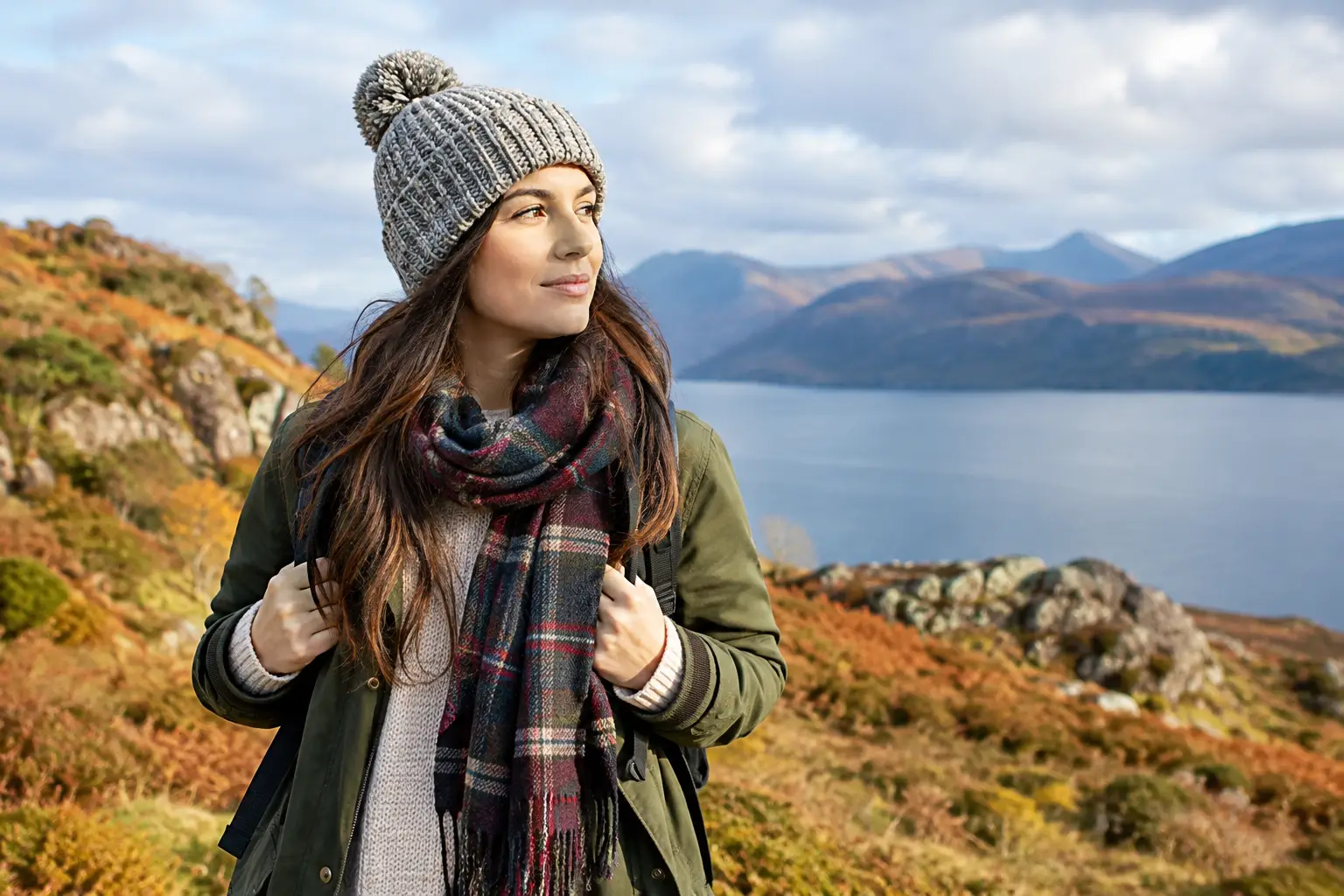
A bright Edinburgh morning can become a wet, windier afternoon before you have finished exploring the Royal Mile. That is why Scotland autumn clothing should be planned around adaptable layers rather than a single heavy outfit. From September to November, comfort comes from being ready to add, remove or dry a layer without letting the weather dictate your plans.
Autumn is one of the most rewarding times to visit Scotland. The summer crowds thin, woodland colours deepen and historic sites feel particularly atmospheric in shifting light. Conditions can also vary sharply between the city, the coast and the Highlands, sometimes within the same day. Packing well means you can enjoy the season without overfilling your case.
Scotland autumn clothing: start with layers
The most useful autumn outfit has three parts: a breathable base layer, a warm middle layer and a weatherproof outer layer. This approach is more effective than relying on a thick coat alone, particularly when you are moving between heated hotels, museums, cafés and exposed outdoor locations.
For the base, choose long-sleeve tops, fine knitwear or merino pieces that feel comfortable indoors and dry reasonably quickly. Cotton is perfectly suitable for city sightseeing on a settled day, but it is less practical if you expect to be outside in persistent rain. A lightweight thermal top is worth bringing if you plan to visit higher ground, lochs or coastal areas later in the season.
A fleece, cardigan or smart wool jumper works well as the middle layer. Wool is a particularly sensible choice in Scotland because it remains warm when conditions turn damp and looks appropriate for relaxed restaurants or hotel lounges. Travellers attending a dinner, theatre performance or professional engagement may prefer a tailored knit, blazer or unstructured jacket that can be worn over a fine layer.
Your outer layer should be genuinely waterproof, not merely shower resistant. Look for a coat with a hood, secure pockets and enough room for a jumper underneath. A longer waterproof jacket provides more protection when walking around castles, gardens and old town streets, while a shorter technical shell can be easier to carry and use with layers.
Do you need a heavy coat in autumn?
Usually, no. A very heavy winter coat can feel excessive in September and much of October, especially if you are spending time in Edinburgh or Glasgow. By November, colder mornings and evenings become more common, and a warmer insulated coat may be welcome. The right choice depends on where you are going and how long you expect to be outdoors.
For a city break focused on galleries, restaurants and central attractions, a waterproof coat over knitwear is normally sufficient. If your itinerary includes rural walks, island visits or Highland viewpoints, pack warmer layers even when the forecast appears mild. Wind changes how cold a temperature feels, and open landscapes offer less shelter than a city street.
There is also a practical consideration for visitors travelling with luggage. One quality waterproof coat and several lighter layers take up less room than separate coats for every possible temperature. They also make it easier to dress comfortably for a full day that begins in the cool and ends indoors.
The weather forecast is useful, but not the whole plan
Check the local forecast shortly before leaving your accommodation, but do not pack solely for the predicted high temperature. Rain, wind strength and the time spent outside matter just as much. A forecast showing 12°C can feel mild during a calm afternoon and distinctly cold at a breezy coastal viewpoint.
It is sensible to keep a compact umbrella for town use, although it is not a substitute for a hooded waterproof coat. Strong gusts can quickly make umbrellas inconvenient, particularly on exposed streets. A hood that stays in place is often the more dependable option.
Footwear matters more than most visitors expect
Autumn pavements can be wet, leaf-covered and slippery, while paths around historic estates may be uneven or muddy. Waterproof shoes or ankle boots with a good grip are among the most useful items to pack. They do not need to look like specialist hiking boots if your plans are mainly urban, but they should be comfortable enough for several hours on your feet.
For city days, leather or weatherproof trainers with a supportive sole are a practical choice. Avoid smooth-soled fashion shoes, especially if you plan to walk over cobbles, climb viewpoints or visit older sites with stone steps. Break in new footwear before travelling. Scotland is best seen on foot, and sore feet can cut a good day short.
If you are including a countryside walk, choose proper walking boots or trail shoes and bring thicker socks. An extra pair of socks in your day bag is a small precaution that makes a real difference after a heavy shower. Visitors who prefer smarter footwear for the evening can pack a second, lighter pair rather than trying to make one pair suit every setting.
What to wear for Edinburgh, castles and the Highlands
A flexible capsule wardrobe is more useful than packing separate outfits for every location. Dark trousers or jeans, comfortable knitwear, a waterproof jacket and reliable shoes will work across most autumn itineraries. Add a scarf, lighter gloves and a compact hat, especially from mid-October onwards.
Edinburgh has a polished but relaxed style. Smart-casual clothing is appropriate in most restaurants, whisky bars and visitor attractions. There is no need to dress formally for sightseeing, but visitors may appreciate having one neater outfit for dinner or an occasion at a city venue. A dress, shirt or tailored trousers can be paired with boots and a warm outer layer without feeling overdressed.
For castles and historic houses, consider the setting rather than the building itself. Many have gravel paths, gardens, outdoor viewpoints and draughty courtyards. Clothes that allow easy movement and footwear that can handle uneven ground are more useful than highly formal pieces. A small crossbody bag or rucksack also leaves your hands free for photographs, guidebooks and a folded waterproof layer.
Highland and coastal days need a more cautious approach. Even a short stop at a viewpoint can be exposed to wind and rain. Wear or carry your warm layer rather than leaving it in your room, and choose clothing that dries quickly. Jeans can be comfortable for dry sightseeing, but walking trousers or heavier leggings may be better for active days in wet weather.
Small accessories that earn their place
The best additions are not glamorous, but they are easy to appreciate when the weather changes. A scarf offers warmth without bulk and can be removed indoors. Gloves are useful for early starts and evening walks, while a beanie or wool hat is particularly welcome on a breezy day.
Bring a small day bag that can hold a water bottle, outer layer, umbrella and any tickets or essentials. If possible, choose one with a water-resistant exterior or use a simple waterproof pouch for documents and electronics. A reusable bag is also helpful for carrying a damp umbrella or an extra layer after the weather improves.
Sunglasses can seem optimistic, yet low autumn sunlight can be bright, especially when driving through open countryside or walking near water. They are lightweight, and worth packing alongside the rainwear.
Avoid packing for a stereotype
Tartan scarves, tweed and waxed jackets can make attractive additions if they suit your personal style, but they are not required to look at home in Scotland. The most successful autumn wardrobe is one that lets you move easily, stay dry and feel comfortable in photographs as well as in practical conditions.
Similarly, do not assume every autumn day is cold and wet. September can bring mild, clear spells, while November may deliver crisp sunshine between showers. Pack a few pieces that work together and let the day determine which layers you wear.
For visitors arranging a full programme of city sights and scenic stops, keeping a spare waterproof layer and comfortable shoes close to hand allows the day to remain enjoyable when the forecast changes. In Scotland, being well dressed is less about predicting the weather perfectly and more about being ready to carry on when it changes.
Ready to book your journey?
Private chauffeur transfers and Highland tours from Edinburgh, booked online in minutes.
Book Online Instantly