
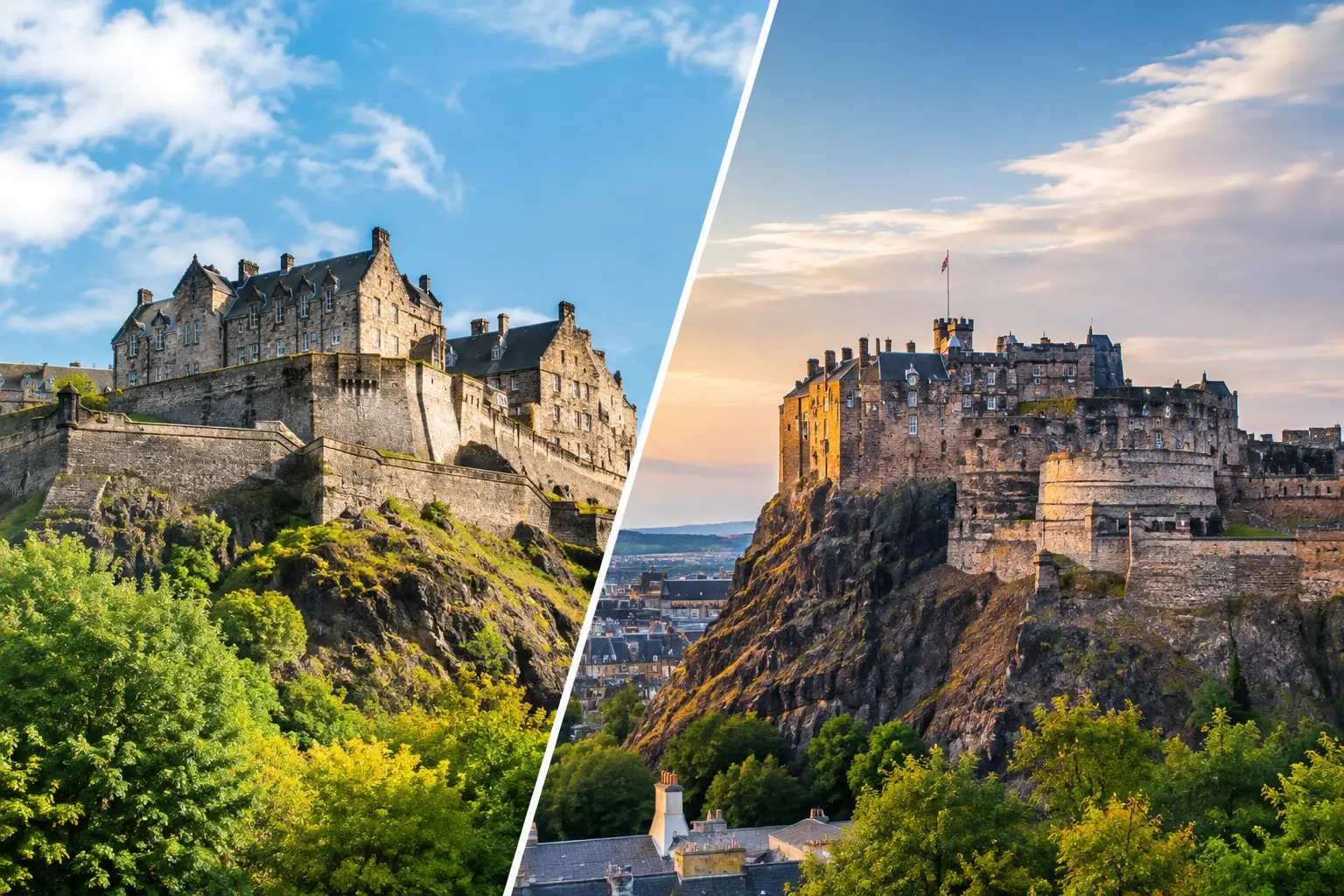
A visit to either fortress can be the high point of a Scottish itinerary, but Stirling Castle versus Edinburgh Castle is not a simple contest. Edinburgh Castle is the commanding landmark at the centre of the capital. Stirling Castle offers a fuller sense of a royal residence, set above one of Scotland’s most consequential landscapes. The better choice depends on how much time you have, what sort of history interests you and whether you value convenience or breathing room.
For many visitors, the best decision is not which castle is objectively better. It is which one will make the day feel unhurried and worthwhile.
Stirling Castle versus Edinburgh Castle: the essential difference
Edinburgh Castle is the easier choice when you are already staying in the city and want a major historic attraction within a day of museums, shops and restaurants. It occupies Castle Rock at the top of the Royal Mile, and its dramatic setting is inseparable from the experience. You see it repeatedly as you move around central Edinburgh, then pass through its gates into a site that has served as fortress, royal residence, military garrison and national symbol.
Stirling Castle is more rewarding when you want history to feel less compressed by a busy city centre. It stands on a volcanic crag above Stirling, where the Highlands and Lowlands meet. From its walls, the view explains why control of this point mattered so much: the River Forth winds through the plain below, and routes north and south stretch beyond it.
Both castles are significant, photogenic and popular. Edinburgh Castle is generally the more convenient addition to a city break. Stirling Castle usually provides more space to absorb the buildings, the royal stories and the surrounding battlefield landscape.
Choose Edinburgh Castle for atmosphere and convenience
Edinburgh Castle has an immediate advantage: its setting is unforgettable. The approach up Castlehill has the energy of a major visitor attraction, particularly during school holidays, weekends and the Edinburgh festivals. Inside, the route takes in the Great Hall, St Margaret’s Chapel, the Royal Palace, the Honours of Scotland and the National War Museum of Scotland, alongside powerful viewpoints across the city.
It suits travellers who want to understand Edinburgh quickly. The castle provides a concentrated introduction to the city’s royal, military and political past, while placing you steps from the Royal Mile, Grassmarket and Princes Street. If you have one full day in Edinburgh and would rather avoid a separate journey, it is the sensible option.
There are trade-offs. Its central location means larger crowds and a more structured visitor flow. The site has slopes, cobbles and uneven surfaces, and the busiest periods can make popular interiors feel brief. Booking in advance is strongly advisable, especially in summer and around festival dates. Arriving near opening time often makes a noticeable difference.
Edinburgh Castle is also the better fit for visitors chiefly interested in city views. From the ramparts, you can pick out the Old Town, New Town, Firth of Forth and distant hills. It is a place where the history and the panorama arrive together.
What Edinburgh Castle does best
Choose Edinburgh Castle if your priority is a famous landmark, a central location and a compact visit that can sit naturally within a wider day in the capital. It is particularly good for first-time visitors, shorter stays and anyone keen to see the Scottish Crown Jewels.
Allow at least two hours, though three gives you more freedom to visit the main buildings without rushing. Build in extra time if you plan to walk the Royal Mile afterwards or stop for photographs at the viewpoints.
Choose Stirling Castle for royal Scotland in greater depth
Stirling Castle has a different character. While it was also a vital stronghold, much of the visitor experience centres on the Stewart court. The restored Royal Palace is designed to evoke the world of King James V, with richly decorated rooms, costumed interpretation and detail that makes the castle feel more domestic and ceremonial than Edinburgh’s more military-focused setting.
The Great Hall, completed for James IV, is among the most impressive surviving medieval banqueting halls in Britain. The Chapel Royal adds another layer of royal history, notably its association with the baptism of Prince Henry in 1594. These are not simply rooms to pass through. Together, they give Stirling a strong sense of how a Scottish court presented power, culture and ambition.
The views are equally important. Look out towards the National Wallace Monument, the Ochil Hills and the ground around the Battle of Bannockburn. Although the battlefield is a separate attraction, seeing the terrain from the castle adds context to the struggles that shaped medieval Scotland.
Stirling is often a better choice for visitors who have already seen Edinburgh Castle, families interested in lively interpretation, or anyone who prefers a less hurried historical visit. It is still busy in peak season, but the atmosphere can feel calmer once you move beyond the entrance areas.
What Stirling Castle does best
Choose Stirling Castle if you want a more immersive royal residence, a stronger connection to Scotland’s medieval landscape and time to explore beyond a single urban attraction. It works especially well as the focus of a day out from Edinburgh, perhaps combined with Stirling’s Old Town, the Church of the Holy Rude or the Wallace Monument.
Give it around three hours at the castle itself. If you add nearby historic sites, plan a full day rather than trying to force everything into a tight timetable.
History: which castle has the stronger story?
Edinburgh Castle has the broader national profile. St Margaret’s Chapel, traditionally dated to the early 12th century, is Edinburgh’s oldest surviving building. The castle has endured sieges, housed monarchs and protected the Honours of Scotland. Its long military use is visible throughout the site, and the daily One O’Clock Gun remains part of its distinctive identity.
Stirling Castle is arguably more coherent as a royal story. It was a favoured residence of the Stewart monarchs and closely associated with Mary, Queen of Scots, who was crowned there as an infant in 1543. The buildings reveal different periods of Scottish power, but the palace and great hall provide a particularly vivid window into Renaissance Scotland.
There is no wrong answer here. Choose Edinburgh for a landmark that gathers centuries of national history into one highly visible place. Choose Stirling for the lived world of kings, queens, court ceremony and military strategy.
Practical planning: crowds, timing and comfort
Both castles involve walking uphill and navigating historic surfaces, so comfortable footwear matters more than visitors sometimes expect. Weather can change quickly, and exposed ramparts are far less enjoyable without a waterproof outer layer. Check current opening arrangements, admission rules and any event closures before setting out, as these can vary by season.
Edinburgh Castle needs the more careful timing. During August, the surrounding area becomes exceptionally busy because of the festivals and Royal Edinburgh Military Tattoo arrangements. If the castle is essential to your plans, reserve a timed entry and leave generous time to reach the entrance through the Old Town crowds.
Stirling Castle is more straightforward to visit as a dedicated outing, but it deserves proper time. Visitors sometimes underestimate how much there is to see, then leave before exploring the palace, gardens and views at a sensible pace. A pre-arranged journey can be useful for groups, families or travellers who prefer to set their own schedule rather than work around train times and local connections.
Can you visit both castles in one trip?
Yes, but not on the same day unless your interest is mainly photographic and you are comfortable with a fast-paced itinerary. Each castle merits at least a half day once travel, entry and time on site are included. Trying to do both in a few hours can turn two exceptional places into a sequence of queues, stairs and hurried photographs.
For a two- or three-day stay, visit Edinburgh Castle on a city sightseeing day and reserve a separate day for Stirling. That balance gives each place the attention it deserves. If you must choose only one, use your base and interests as the deciding factors: Edinburgh for ease and iconic city drama; Stirling for palace history, wider landscapes and a more leisurely encounter with royal Scotland.
Whichever you choose, do not treat the castle as a box to tick. Pause on the walls, look at the land each fortress was built to command, and let the setting do some of the historical work for you.
Ready to book your journey?
Private chauffeur transfers and Highland tours from Edinburgh, booked online in minutes.
Book Online Instantly