
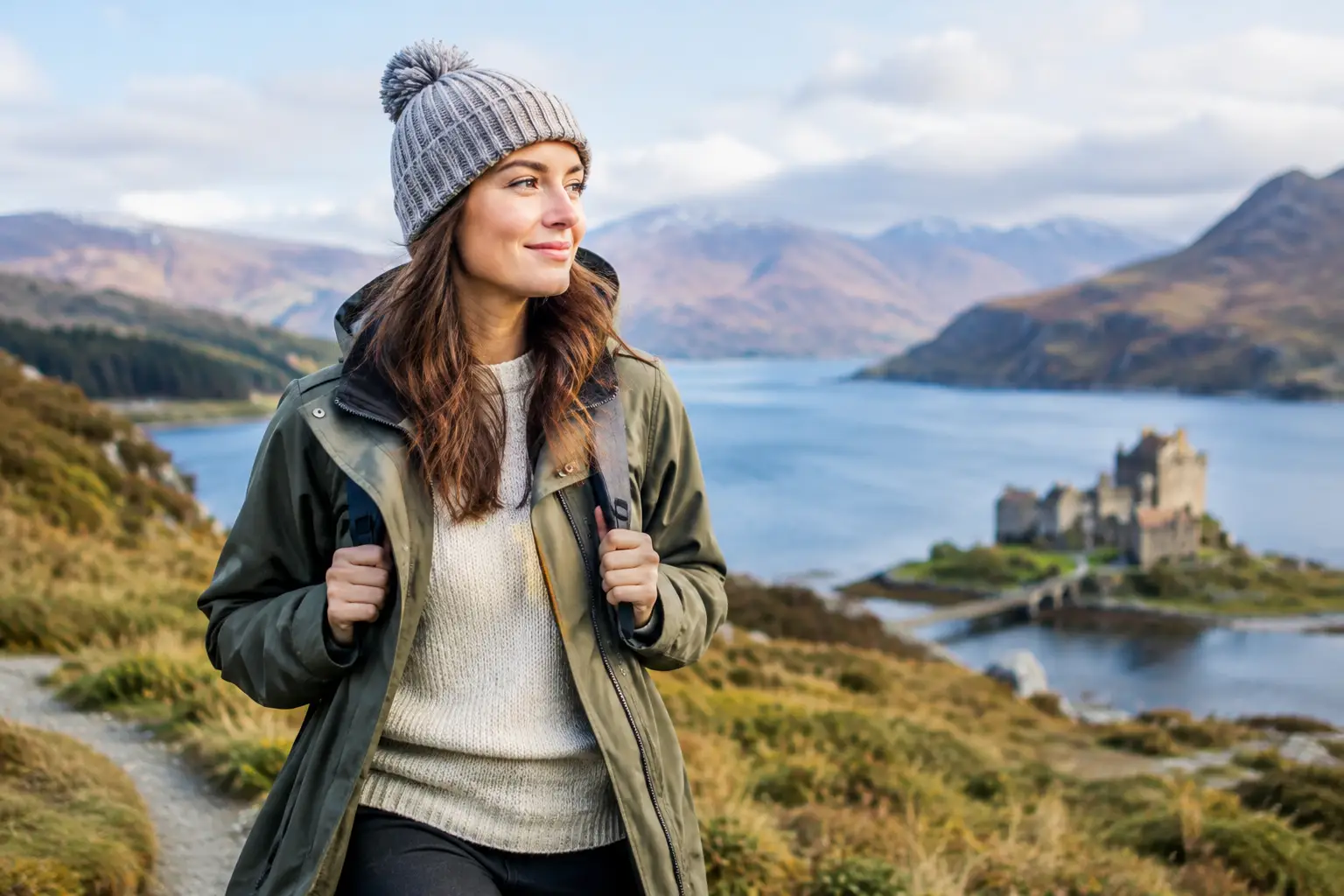
A bright Edinburgh morning can feel almost warm in April, then turn sharply colder when the wind picks up on Calton Hill. By lunchtime, a passing shower may have arrived. That is the reality behind the question of what to wear in Scotland in spring: pack for changing conditions rather than for one forecast.
Spring is a rewarding time to visit, with longer daylight, fresh green landscapes and fewer summer crowds at many major sights. It is also a season of contrasts. The right clothing will keep a castle visit, coastal walk or evening reservation comfortable without requiring an oversized suitcase.
What to wear in Scotland in spring
The most reliable approach is simple: light layers, a waterproof outer layer and footwear that can cope with wet pavements or uneven ground. Scottish spring weather is rarely difficult when you are prepared, but it can feel more changeable than visitors expect.
March is often brisk, particularly in the mornings and after sunset. April can bring bright, clear days alongside rain and wind, while May is usually milder but still far from guaranteed to be dry. Edinburgh may feel pleasant in sheltered streets, yet exposed viewpoints, lochsides and coastal locations can be noticeably cooler. The Highlands can be colder again, especially at elevation.
Avoid relying on a heavy winter coat as your only solution. It may be too warm during a busy day of sightseeing, while leaving you with no flexible middle layer when the temperature changes. A smart, adaptable wardrobe is more useful.
Build your outfit around three layers
Start with a breathable base layer, such as a cotton T-shirt, fine knit or long-sleeved top. Add a mid-layer that provides warmth, ideally a cardigan, merino jumper, lightweight fleece or overshirt. Finish with a properly waterproof jacket with a hood.
A hood is more practical than an umbrella on windy streets, at open historic sites and along the coast. An umbrella can still be useful in town, but it should not be your only rain plan. Choose a jacket that is genuinely waterproof rather than merely shower-resistant if you expect to spend full days outdoors.
For bottoms, jeans, tailored trousers, chinos or thicker leggings work well. Denim is perfectly suitable for city sightseeing, but it dries slowly after a prolonged downpour. If you are planning walks beyond paved paths, water-resistant trousers may be the better choice.
Footwear matters more than most travellers expect
Edinburgh’s cobbles, slopes and occasional wet paving demand comfortable shoes with grip. Trainers with a supportive sole are suitable for most city itineraries, provided they are reasonably water-resistant. Leather ankle boots can be a polished alternative for restaurants, galleries and evenings out, and are often more capable in rain than lightweight canvas shoes.
For country estates, lochside paths or Highland sightseeing, choose waterproof walking shoes or boots. You do not need full hiking equipment for every scenic stop, but smooth-soled fashion shoes are a poor match for muddy paths and damp stone steps. Bring spare socks in your day bag if a longer outdoor day is planned.
Open sandals are rarely the most useful choice before summer. A pair can be pleasant on an unusually warm May afternoon, but closed shoes will serve you far more often.
Pack for the place, not just the month
Spring clothing needs vary according to where your plans take you. A compact wardrobe can still cover both polished city outings and rural days if each item earns its place.
Edinburgh and other cities
City visitors can dress neatly and comfortably. Smart-casual clothing is accepted in most restaurants, bars, museums and visitor attractions. A jumper, dark trousers or jeans, and clean trainers or boots will feel appropriate in most settings.
For evening dining, add a smarter shirt, blouse, dress or jacket rather than packing a separate formal wardrobe. Scotland is generally relaxed in its dress code, although some fine-dining venues and private events may expect a more considered appearance. Check the reservation details if you are attending a particular occasion.
A cross-body bag or small backpack is useful for carrying a folded waterproof layer, water bottle and any hat or gloves removed during the day. Keep valuables secure in crowded visitor areas, particularly during festival periods and at busy attractions.
Highlands, islands and the coast
The scenery may look tranquil, but coastal and upland conditions can change quickly. Wind is often the deciding factor. A temperature that seems mild on paper can feel significantly colder beside a loch, on a ferry deck or at a viewpoint.
Prioritise a windproof waterproof jacket, warmer mid-layer and solid shoes. A small daypack is helpful for spare layers, snacks and a reusable bottle. If you are travelling to the west coast or islands, allow for rain even when the forecast appears favourable. Dry bags are not essential for ordinary sightseeing, but a simple waterproof pouch for mobile phone and documents is sensible.
In late spring, midges may begin to appear in some rural areas, especially in still, damp conditions. They are not usually a major concern in cities, but long sleeves and insect repellent can make an evening outdoors more pleasant in the Highlands and on the west coast.
The small items worth bringing
A few compact accessories make a disproportionate difference in spring. Include these four items in addition to your main clothing:
- A lightweight scarf, which adds warmth in wind and can be removed easily indoors.
- A beanie or cap, useful on breezy viewpoints and during cooler March or April mornings.
- Sunglasses, because low, bright spring sunshine is common even on cold days.
- A compact reusable water bottle, particularly useful on full-day excursions and walks.
Gloves are worth packing for March and early April, especially if you feel the cold or plan to spend time outside after dark. By May, they are less likely to be needed, though conditions in exposed areas remain unpredictable.
What not to pack too much of
There is little value in bringing multiple bulky jumpers, several pairs of heavy boots or a different outfit for every day. Accommodation laundry facilities vary, but re-wearing outer layers and trousers is normal when travelling. One waterproof jacket, two warm mid-layers and a rotation of base layers will cover most trips.
Likewise, do not pack only thin spring clothes because the calendar says May. A warm spell is possible, but evenings can still be cool. The most successful packing list combines lighter pieces for indoor comfort with layers that can be added quickly outdoors.
If you are arriving straight from a warmer destination, keep your jacket and an extra layer accessible rather than buried in checked luggage. Scotland’s weather often makes its first impression before you have reached your hotel.
A practical capsule wardrobe for a short trip
For a three- or four-night visit, aim for one waterproof jacket, two mid-layers, four tops, two pairs of trousers or jeans, comfortable walking shoes and one smarter pair of shoes if your plans require them. Add underwear, sleepwear and the small accessories that suit the forecast.
Choose colours that work together so that layers can be mixed without thought. Navy, charcoal, olive, cream and black are easy options, while a brighter scarf or knit adds personality without complicating packing. For travellers with dinner plans or theatre tickets, one crease-resistant smart outfit is usually sufficient.
Before leaving each morning, check both the temperature and the wind forecast, not just the rain symbol. If you can comfortably remove a layer when the sun appears and replace it when the weather turns, you are dressed correctly for a Scottish spring day.
A little preparation gives you the freedom to enjoy the changing light, fresh air and unexpected sunshine rather than watching the clouds. Pack for flexibility, step outside with confidence, and let the season do the rest.
Ready to book your journey?
Private chauffeur transfers and Highland tours from Edinburgh, booked online in minutes.
Book Online Instantly