
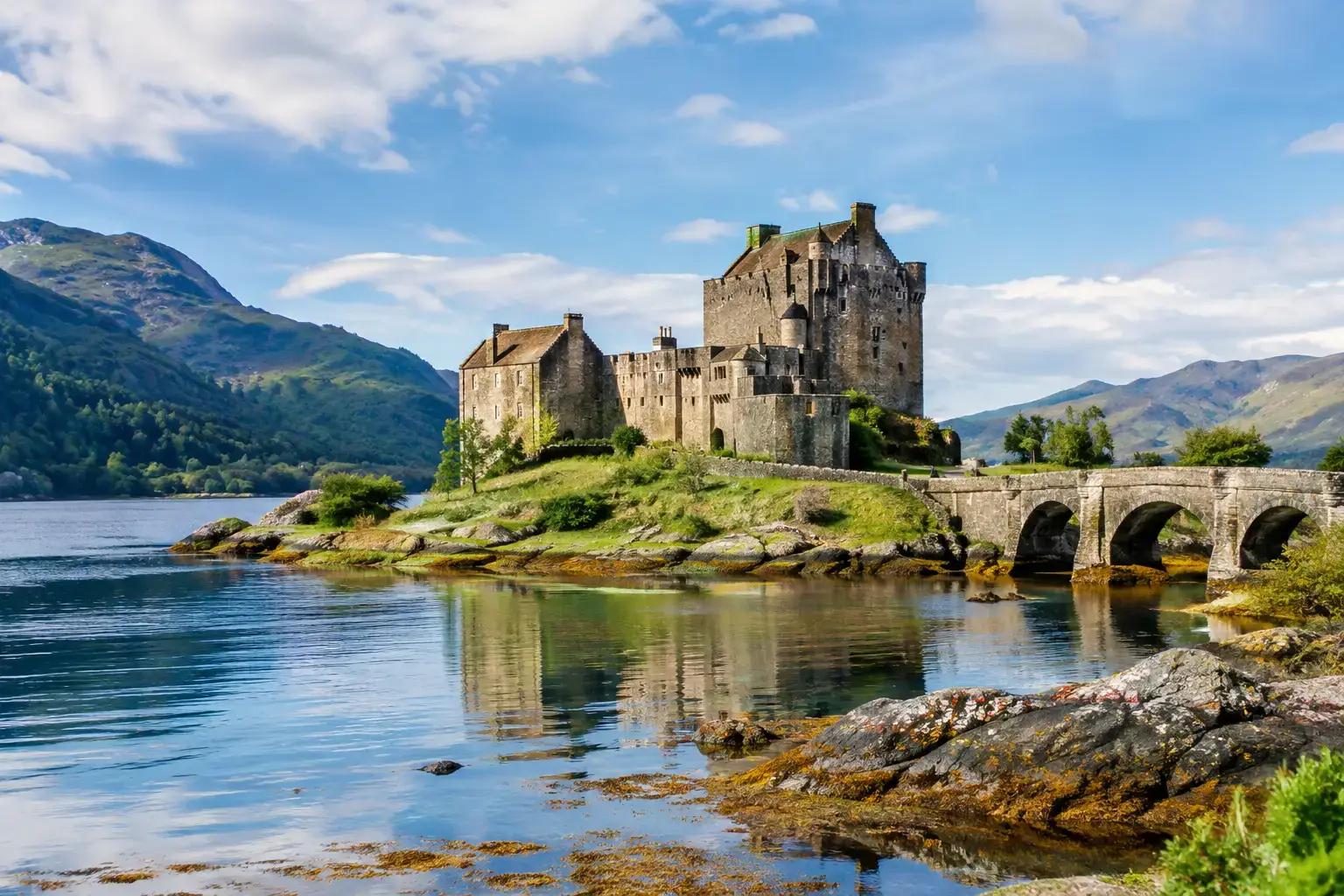
A castle visit in Scotland is rarely just a matter of stepping through a gate and looking at old walls. One may stand above a working city, another on a loch-side promontory, and another at the end of a single-track road where the weather changes by the minute. The best Scottish castles reward a little planning, particularly if time is limited and you want more than a hurried photograph.
For visitors based in Edinburgh, the right choice depends on what you want from the day: royal interiors, dramatic scenery, family-friendly interpretation, or a quieter ruin with fewer crowds. Opening arrangements, access and grounds can vary by season, so confirm the current details before setting out.
1. Edinburgh Castle for the essential first visit
Edinburgh Castle is Scotland’s most recognisable fortress for good reason. Its volcanic setting dominates the Old Town, while the site itself contains centuries of royal, military and civic history. Visitors can see the Crown Jewels, the Stone of Destiny, the Great Hall and St Margaret’s Chapel, often described as Edinburgh’s oldest surviving building.
It is also one of the country’s busiest attractions. Book a timed entry well ahead during school holidays, August and the festive period, and choose an early slot if you would prefer more space in the main interiors. Allow at least two hours, or longer if you enjoy museums and historical detail.
The castle sits at the head of the Royal Mile, making it easy to combine with the Old Town. The approach is steep in places and the surface can be uneven, so sensible footwear is more useful than formal footwear. This is a strong choice for first-time visitors, but it is not the most peaceful castle experience.
2. Stirling Castle for royal history and wide views
Stirling Castle has the scale and drama people expect from a major Scottish stronghold, with a different atmosphere from Edinburgh. It was a favoured residence of the Stewart kings and queens, and its restored Renaissance Palace gives a vivid impression of court life in the sixteenth century.
The views are part of the appeal. From the ramparts, visitors can look across the Forth Valley towards key locations in Scotland’s wars of independence, including the Wallace Monument and Bannockburn. The result is a visit that connects royal history with the surrounding landscape rather than presenting events as a series of objects behind glass.
Stirling works especially well as a full day when paired with the town’s historic centre or nearby Bannockburn. It is around an hour from Edinburgh in favourable conditions, though journey times can change considerably at busy periods. Build in enough time to enjoy the castle rather than treating it as a quick stop between destinations.
3. Tantallon Castle for coastal drama
Tantallon Castle, near North Berwick, feels strikingly different from the grand palaces of Edinburgh and Stirling. Its immense red sandstone curtain wall faces the North Sea, and the ruined towers frame views towards Bass Rock. The setting is the reason to visit as much as the castle itself.
This is a fine option for travellers looking for a half-day excursion from Edinburgh, particularly on a clear day. The coastal wind can be sharp even in late spring, and exposed sites have a habit of feeling colder than the forecast suggests. Bring an extra layer and footwear suitable for grass, gravel and uneven paths.
Tantallon is less about furnished rooms and more about atmosphere. Families may find it easier to engage with Edinburgh or Stirling Castle’s indoor displays, while photographers, history enthusiasts and anyone who enjoys a dramatic coastal walk may prefer Tantallon’s open setting.
4. Doune Castle for film, television and medieval character
Doune Castle is one of the most distinctive castles in central Scotland. Much of the fifteenth-century structure survives, including its imposing gatehouse, great hall and kitchens, so it feels unusually complete for a medieval site. The self-guided experience gives visitors room to explore at their own pace.
It is also familiar to many screen audiences. Doune has appeared in several productions, including as Castle Leoch in Outlander. That association can make it particularly appealing to fans, but the building stands on its own merits: this is an excellent example of a late medieval lordly residence with original character still intact.
A visit here combines well with Stirling if you have a full day, though the experience is more rewarding when schedules are not overly tight. The lanes around Doune are attractive but can be slower than a map suggests, particularly behind agricultural traffic or during busy summer weekends.
5. Blackness Castle for a different view of the Forth
Blackness Castle is often called the ship that never sailed because of its unusual shape, projecting into the Firth of Forth. Its position makes it a memorable choice for visitors who have already seen Edinburgh Castle and want something less obvious without travelling far.
The castle has served several roles over the centuries, from noble residence to garrison fortress and prison. Its thick walls and compact spaces create a more austere mood than the grander royal castles. The walkways and views over the water are highlights, although the exposed site can be blustery.
Because Blackness is comparatively small, it suits an itinerary with another local stop rather than an entire day on its own. It is a worthwhile addition for travellers interested in military history, coastal landscapes or screen locations, as the castle has featured in Outlander and other productions.
6. Dunnottar Castle for the iconic cliff-top setting
Dunnottar Castle, south of Stonehaven, is among the most photographed castle ruins in Scotland. The site occupies a rocky headland, almost surrounded by the North Sea, with steep paths leading down from the visitor entrance. Its ruined buildings include a tower house, barracks, stables and a great hall.
The scenery is magnificent, but access needs honest consideration. The route involves a substantial descent and, inevitably, a climb back up. It may not suit visitors with limited mobility, and wet or windy weather makes the experience more demanding. Give yourself time, wear shoes with grip and avoid trying to fit the castle into a rushed schedule.
The castle’s history is as compelling as its setting. Dunnottar played a crucial role in protecting the Honours of Scotland from Cromwell’s forces in the seventeenth century. Knowing that story before you arrive gives the ruins greater meaning than the view alone.
7. Urquhart Castle for Loch Ness views
Urquhart Castle is one of the principal historic sites on Loch Ness. Although much of the castle is ruined, its location on the western shore makes it a compelling stop for travellers exploring the Highlands. The Grant Tower, surviving walls and loch-side setting create the classic image many visitors have in mind when they picture a Highland castle.
Expect this to be popular. Summer crowds can be significant, especially when coach tours and loch cruises arrive at similar times. An early or later visit may feel calmer, and advance tickets are sensible when availability is limited.
The trade-off is distance. Urquhart is not a realistic casual day trip from Edinburgh if you want time to appreciate the landscape and avoid an exhausting day. It is best included within a wider Highland itinerary, ideally with an overnight stay nearby.
8. Craigmillar Castle for a quieter Edinburgh experience
Craigmillar Castle offers one of the most rewarding historical visits within Edinburgh itself. Less crowded than the city’s headline attraction, it has a well-preserved tower house, a maze of rooms and passages, and grounds that feel remarkably spacious for an urban setting.
Mary, Queen of Scots stayed here in 1566, and the castle’s long development from fortified tower house to country residence is easy to trace as you explore. It is particularly good for visitors who enjoy finding details themselves rather than following a set route through busy galleries.
Craigmillar can be a better choice on a day when Edinburgh Castle is fully booked or when you would rather spend time outdoors. It also rewards repeat visitors who want to see a side of the capital beyond the Royal Mile.
How to plan Scottish castle visits well
The practical details matter. Many Scottish castles have seasonal hours, restricted winter opening or occasional closures for conservation work, weather and private events. Check the official visitor information shortly before travelling, even if you have already looked weeks earlier.
Aim for one major castle per day if you want to explore properly. Two can work when they are close together and one is relatively small, but packing too much into a single itinerary often means missing the landscape, local towns and museum displays that provide the context. Scotland’s roads and weather do not always reward a timetable planned to the minute.
For outdoor ruins, take a waterproof layer throughout the year. In summer, sun, wind and rain can all arrive during the same visit. In autumn and winter, daylight is the limiting factor, particularly for castles set outside major towns. A morning start leaves more room for a relaxed visit and a safe return journey.
The most memorable castle days tend to leave space for an unplanned pause: a viewpoint above the Forth, a walk along a coastal path, or simply a few quiet minutes on the ramparts. Choose the castle that fits the kind of day you want, not only the one you have seen most often in photographs.
Ready to book your journey?
Private chauffeur transfers and Highland tours from Edinburgh, booked online in minutes.
Book Online Instantly