
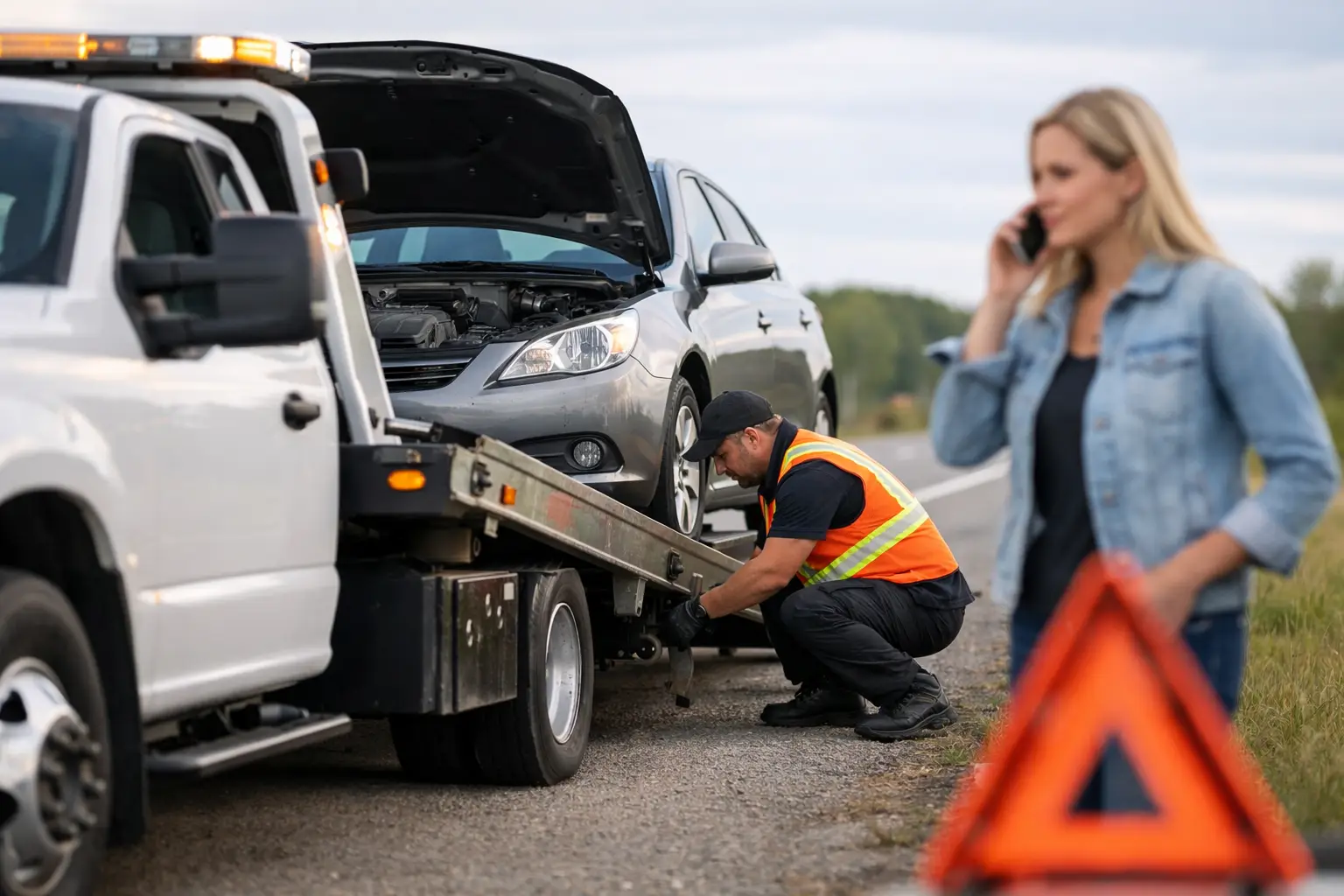
When your vehicle stops at the roadside, the quality of the response matters far more than the advert you saw last week. A proper roadside recovery service review should focus on what happens in the difficult moment - how quickly help arrives, how clearly costs are explained, and whether your vehicle is handled with care rather than rushed onto a lorry.
For private motorists, business travellers and anyone responsible for moving clients on time, recovery is not a small add-on. It is part of your wider transport risk planning. Delays, unclear call-out charges and poor communication can turn a straightforward breakdown into a missed flight, a lost meeting or an expensive day off the road. That is why it makes sense to assess recovery services with the same care you would apply to any professional transport provider.
How to read a roadside recovery service review properly
Many reviews focus on the emotional high point or low point. That is understandable. If someone has been stranded in poor weather for two hours, or rescued within thirty minutes by a calm and capable driver, that experience shapes the review. Still, one strong opinion is not enough on its own.
The better approach is to look for patterns. If several customers mention that the operator gave an accurate arrival window, kept them updated by phone and handled payment exactly as quoted, that tells you something useful. If the same service repeatedly receives complaints about hidden mileage fees, missed ETAs or damaged alloys after loading, that also tells you what to expect.
A worthwhile review is less about star ratings and more about consistency. Professional recovery depends on systems, not luck. You want evidence that the company can handle pressure at awkward times, not just perform well on a quiet afternoon.
Response time is important, but context matters
The first thing most people check in a roadside recovery service review is response time. Fair enough. Nobody wants to wait on the hard shoulder or in a dark lay-by longer than necessary. But response time should be judged with some context.
A company operating in a city may arrive faster than one covering rural routes across a wide area. That does not automatically make it the better service. What matters is whether the quoted time was realistic and whether the operator communicated honestly if conditions changed. Traffic, weather and distance all affect arrival times, especially in parts of Scotland where road coverage is broad and routes can be slower than the mileage suggests.
What separates a dependable service from a poor one is not always a dramatic difference in speed. Often it is the quality of communication. A clear update saying, "Our driver is forty minutes away due to an earlier call-out," is far better than silence followed by a surprise delay.
What good response looks like
Good response starts with the first phone call. The dispatcher should ask the right questions about location, vehicle type, fault symptoms and safety. That helps them send the correct vehicle and equipment first time. If the operator sounds vague, rushed or unsure about access requirements, expect complications later.
Arrival should also feel organised. The recovery driver should know your details, confirm the destination and explain the next steps. Efficient service is not just about turning up quickly. It is about removing uncertainty from the situation.
Pricing should be clear before the vehicle moves
One of the biggest weak points in this market is pricing. A service can appear competitive until the invoice grows through mileage charges, out-of-hours fees, storage costs or supplements for vehicle size. Any serious review should pay attention to whether customers were quoted clearly and billed fairly.
Transparent pricing does not always mean the cheapest rate. In fact, the lowest headline price can be the least predictable option. A premium service will often cost more, but it should tell you exactly what you are paying for - call-out, roadside assistance if applicable, onward recovery distance and any extras that genuinely apply.
For business users, this matters even more. If you are arranging travel for staff, guests or executives, uncertainty around cost creates administrative friction on top of disruption. Clear fixed pricing is usually worth paying for because it removes avoidable back-and-forth when time is already under pressure.
Vehicle handling tells you a lot about standards
A useful roadside recovery service review should look beyond the rescue itself and ask how the vehicle was treated. This is especially relevant for premium cars, executive vehicles, low-clearance models and anything carrying client-facing value.
Poor loading practice can create fresh problems. Scraped bumpers, wheel damage and careless handling are not minor issues. They are signs that the operator is cutting corners or using drivers without the right level of training and attention.
Professional handling is usually easy to spot. The driver checks the condition of the vehicle, explains how it will be loaded, uses the right equipment and avoids the rough, improvised feel that creates damage. If reviews repeatedly mention care, courtesy and confidence, that is a strong signal that standards are taken seriously.
Premium expectations are reasonable
If you usually book executive travel, you should not lower your standards simply because the vehicle is off the road. Recovery is still a professional service. Clean presentation, polite communication and careful handling remain relevant. Dependability matters just as much here as it does with a chauffeur or airport transfer Edinburgh booking.
Coverage is often misunderstood
A provider may advertise broad coverage, but the real question is how that works at the edge of its operating area. Some firms have excellent response close to base and much slower coverage further out. Others rely heavily on subcontractors, which can be fine if managed well, but inconsistent if not.
This is where reviews become particularly useful. Customers often reveal whether coverage claims match reality. If the company says it serves long-distance routes, can it recover promptly from less central locations and transport the vehicle where it actually needs to go? Or does it simply tow to the nearest depot and leave the customer to sort out the rest?
For travellers moving between cities, golf destinations or airports, onward planning matters. A breakdown near the end of a long journey still needs a composed, competent response. Convenience is not just collecting the vehicle. It is helping the customer reach a practical next step.
Customer service counts under pressure
Breakdowns make people tense. They may be late, cold, worried about family plans or trying to protect a business appointment. A review that mentions calm, respectful customer service should not be dismissed as soft detail. It is central to the experience.
The best operators know how to manage the practical and human side at once. They ask clear questions, avoid jargon and give straightforward answers. They do not make the customer feel at fault for needing help. That matters whether you are a private driver on a weekend journey or a corporate traveller trying to salvage a tight schedule.
By contrast, poor customer service often shows up in small but telling ways. A dispatcher who interrupts, a driver who provides no ETA updates, or a payment process that becomes awkward at the roadside all suggest weak operational discipline.
Membership model or pay-as-you-go
This depends on how often you drive and what kind of journeys you make. Membership-based services can offer peace of mind if you travel regularly and want predictable support. They may be good value for households with older vehicles or drivers covering high annual mileage.
Pay-as-you-go recovery can suit occasional motorists, people with newer vehicles, or anyone who prefers not to commit to annual cover. It can also be the more practical route for one-off incidents during longer pre-booked travel arrangements.
The trade-off is straightforward. Membership spreads cost and can simplify decision-making when something goes wrong. Pay-as-you-go avoids ongoing fees but may feel more expensive at the point of need. Neither option is universally better. It depends on frequency of use, vehicle reliability and how much certainty you want in advance.
A practical standard for judging any provider
If you are comparing services, focus on five points. Was the response time realistic? Was the price clear before recovery started? Was the vehicle handled properly? Was communication consistent? And would you trust the same provider again if timing truly mattered?
Those questions cut through marketing quickly. They also reflect what most customers actually care about when plans have gone wrong and the roadside is no place for guesswork.
In premium transport, reliability is never just about getting from A to B when things go well. It is also about how problems are managed when they do not. That is why any serious roadside recovery service review should judge calm execution, clear pricing and professional care above bold claims. If a provider can deliver those consistently, it is worth keeping their details close the next time the journey does not go to plan.
Ready to book your journey?
Private chauffeur transfers and Highland tours from Edinburgh, booked online in minutes.
Book Online Instantly